
News
Four years ago, I was interviewing John Anthony in chemistry about his work on solar cells and light-emitting diodes (LEDs). He mentioned this crazy undergraduate student, who used to work in his lab, who constantly dyed her hair. She made bright orange and fluorescent pink LEDs that matched her “hair color of the week.” The science behind these organic compounds was intriguing, he told me, although he admitted there wasn’t much demand for those shades of LEDs in consumer electronics.
Fast forward to today, that undergrad—Susan Odom—is now an assistant professor of chemistry with her own lab. Odom tells me the exact same story—as she points out the pink hair photo that used to hang in Anthony’s lab. Odom credits that LED project as the experience that convinced her to pursue a research career.
In the Qualitative Organic Analysis Laboratory course she teaches, the
The University of Kentucky Office of Nationally Competitive Awards has announced that history junior Abigail King, of Lexington, has been selected for a place at a Fulbright Summer Institute to study at England's Durham University in one of the most prestigious and selective summer scholarship programs operating worldwide.
The U.S.-U.K. Fulbright Commission is the only bilateral, transatlantic scholarship program offering awards and summer programs for study or research in any field, at any accredited United States or United Kingdom university. The commission is part of the Fulbright program conceived by Senator J. William Fulbright in the aftermath of World War II to promote leadership, learning and empathy between nations through educational exchange. Award recipients and summer program participants are expected to be future leaders for tomorrow and support the "
by Guy Spriggs
In organizing its spring 2016 information meeting for majors, the UK Department of Mathematics solicited faculty to give the closing address. Professor Richard Ehrenborg volunteered, but suggested a less traditional approach.
“I said I wasn’t going to give a talk,” he recalled. “I was going to do a show.”
Instead of giving a lecture on new developments in the field or solving complex equations on the chalkboard, Ehrenborg led volunteers and spectators through tricks involving playing cards and simple geometric shapes. In short order, he was able to predict a single card’s location in a shuffled deck and prove that 168 and 169 are actually equal to each other.
But these were no mere sleight of hand illusions – as Ehrenborg points out, these intriguingly simple tricks all demonstrate valuable mathematical principles. These efforts are also
Some stories require a little more — a little more discussion, more context, more depth and breadth.
That’s the idea behind “Behind the Blue” — a new weekly podcast created by UK Public Relations and Marketing. It is designed to explore — through probing, in-depth interviews — the stories that make UK the university for Kentucky and that have impact across the institution, the Commonwealth and, in some cases, the world.
The first podcast, appropriately enough, focuses on election-year politics and the presidential election. To provide insight and context on an extraordinary and historic election, UK political science professor and elections expert Stephen Voss discusses at length the forces shaping this year’s presidential race, his insights on both the Democratic and Republican parties, and an individual candidate or two, who may be making headlines.
The Society of Postdoctoral Scholars at the University of Kentucky is hosting a symposium to feature the work of postdoctoral scholars in Kentucky and surrounding areas. The event will feature a keynote presentation by UK's Dr. Hollie Swanson, a professor in the College of Medicine's Department of Pharmacology and Nutritional Sciences, oral presentations by Kentucky postdocs, a poster session and a panel discussion on interviewing techniques.
The symposium will allow for the exchange of ideas across a broad range of fields and abstract submissions are welcome from any discipline. Postdocs from Kentucky and Ohio are especially encouraged to submit abstracts and graduate students are also welcome to participate. The objective of the symposium is to share research across many different fields and talks should be general and accessible to an audience outside of the
By Ann Eads
(May 10, 2016) – The University of Kentucky Staff Senate will moderate a debate between staff representative to the Board of Trustees candidates at 2 p.m. Thursday, May 12, in the auditorium of the William T. Young Library.
Anthany Beatty, assistant vice president for public safety at UK, will moderate the debate. Staff members are encouraged to attend or view via the Staff Senate website by visiting https://connect.uky.edu/staffsenate.
The UK Staff Senate invites all university staff to participate in the campaign and election process to help determine the next staff representative to the Board of Trustees. The campaign period begins May 13, 2016. The staff trustee candidates are Mike Adams,
The following University of Kentucky students have been awarded U.S. Department of State Critical Language Scholarships (CLS) to study critical languages during the summer of 2016:
Name Language Host Locations Lauren Copeland Arabic Meknes, Morocco Bridget Nicholas Chinese Changchun, China Faiyad Mannan Japanese Hikone, Japan Morgan Saint James Russian Nizhny Novgorod, RussiaThe Critical Language Scholarship Program is part of a U.S. government effort to expand dramatically the number of Americans studying and mastering critical foreign languages. These students are among the approximately 560 U.S. undergraduate and graduate students who received a CLS scholarship in 2016. Selected finalists hail from 48 states and the District of Columbia, and represent more than 200
Three new species of mouse lemurs — the smallest primates in the world — have been discovered by scientists at the University of Kentucky, along with collaborators at the German Primate Center and Duke Lemur Center.
"We didn't go into this work looking for a new species, but there was no real way to get around the fact that there are three new species here to describe," said Scott Hotaling, lead author on the Molecular Ecology paper and a doctoral candidate in the UK Department of Biology.
Twenty years ago, there were only two species of mouse lemurs. Today, including the newly-discovered species Microcebus ganzhorni, Microcebus manitatra and Microcebus boraha, mouse lemurs comprise 24 species, which are only found in the highly biodiverse island of Madagascar.
Microcebus ganzhorni was named after the ecologist Professor Jörg Ganzhorn from
Two new trees recently planted on the Washington Avenue lawn of the Thomas Hunt Morgan Biological Sciences Building hold special meaning. The native Blue Ash, the species that defines the Bluegrass Region, are in memory of colleagues in the Department of Biology who passed away recently: graduate student Martin Striz (Aug. 17, 2014), custodial staff member Kenny Robinson (Jan. 10, 2014) and Biology Department staff member Tony Games (Oct. 19, 2015).
“Martin, Kenny and Tony represented an important part of our community and their passing still affects many of us,” said Scott Hotaling, a graduate student in the Department of Biology. “The trees are meant to serve as a memorial to all of those we have lost who were part of the departmental family.”
An informal gathering is planned at the trees Friday, May 6, at 11 a.m. to pay tribute to the significant impact of these
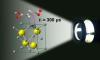
Finding the time scale for the effective transfer of electrons is not an easy task.
With the increasing need for renewable fuels scientists have attempted to harvest abundant sunlight while simultaneously reducing CO2. However, the process is generally inefficient and many aspects needed for improvement remain unknown. Chemists at the University of Kentucky have now contributed new knowledge to explain how sunlight energy is stored in chemical bonds creating energy rich molecules from depleted ones. The stable photocatalyst generates organic fuels with a rate of production that depends on the time spent on the surface by precursor molecules.
Finding the time scale for the effective transfer of reducing electrons in a photocatalyst capable of reducing species containing double bonds or CO2 is not an easy task. What is needed is a reducing electron that is generated upon
By Weston Loyd
(April 28, 2016) — Two current University of Kentucky Gaines Fellows, David Cole and Abby Schroering, have successfully completed their jury projects, a requirement to complete the first year of their fellowship, by creating podcasts on two culture fields with experts from right here in Lexington.
Cole, a junior English major from Monticello, Kentucky, has created a series of “Zen podcasts” that explore the world of video games. The podcasts, which are not heavily edited, lets the conversation of his interviews with local video game developers flow naturally. The goal for these podcasts is to showcase the developers and their video games to a larger audience and prove that Lexington is producing both high quantity and quality artistic work that very few cities of its
By Whitney Harder
(April 28, 2016) — Lee X. Blonder, professor in the University of Kentucky Department of Behavioral Science and the Sanders-Brown Center on Aging, has been elected by the university faculty as a faculty representative to the UK Board of Trustees. Blonder was elected to a three-year term, which will expire June 30, 2019.
Blonder joins Robert Grossman, professor in the UK Department of Chemistry, as one of two faculty representatives on the board.
"I am honored to have been elected to serve as faculty trustee," Blonder said. "My goals include
By Gail Hairston
(April 28, 2016) — For decades, researchers and scholars have studied what some call the “racial achievement gap” in academics and careers, without having a clear understanding why such a gap exists.
Edward Morris, associate professor of sociology and director of undergraduate studies at the University of Kentucky College of Arts and Sciences, and Brea Perry, associate professor of sociology at Indiana University, assert that racial disparities in academic achievement constitute “one of the most important sources of American inequality.”
“Racial inequalities in adulthood — in areas as diverse as employment, incarceration and health — can be clearly
By Eric Lindsey
(April 27, 2016) — Student-athletes from all of the University of Kentucky's winter teams combined to earn a total of 49 spots on the Southeastern Conference (SEC) Spring Academic Honor Roll, the league announced Wednesday.
A total of 667 student-athletes were named to the 2015-16 Winter SEC Academic Honor Roll. The 2015-16 Winter SEC Academic Honor Roll is based on grades form the 2015 spring, summer and fall terms.
Any student-athlete who participates in a SEC championship sport or a student-athlete who participates in a sport listed on his/her institution’s NCAA Sports Sponsorship Form is eligible for nomination to the Academic Honor Roll. The following criteria will be followed: (1) A
By Blair Hoover
(April 27, 2016) — Provost Tim Tracy honored five faculty members and four teaching assistants with Provost's Outstanding Teaching Awards at the 2016 UK Faculty Awards Ceremony. The William B. Sturgill Award and the Albert D. and Elizabeth H. Kirwan Memorial Prize were also awarded at the ceremony. The ceremony took place Thursday, April 21, in the Lexmark Public Room in the Main Building.
The William B. Sturgill Award was awarded to Carl Mattacola, a professor in the rehabilitation sciences program in the College of Health Sciences.
The Albert D. and Elizabeth H. Kirwan Memorial Prize was awarded to Gary J. Ferland, a physics and astronomy professor in the College of Arts and
By Kathy Johnson, Kelli Meyer
(April 27, 2016) — University of Kentucky Professor Andrew Hippisley has been selected to participate in the American Council on Education's (ACE) ACE Fellows Program, the longest running leadership development program in the United States. Hippisley, in the College of Arts and Sciences' Department of English, is one of 33 emerging college and university leaders chosen for the 2016-17 class of ACE Fellows.
Hippisley joined the UK faculty in 2007 as an assistant professor of linguistics and became a full professor in 2012. He is director of the Linguistics Program in the College of Arts and
By Terrence Wade
(April 26, 2016) — The University of Kentucky Colleges of Arts and Sciences and Engineering are proud to have Nobel Prize Winner Frank Wilczek on campus this week as he delivers his lecture “Some Intersections of Art and Science.” The lecture will take place at 7:30 p.m. Thursday, April 28, at Memorial Hall. The event is free and open to the public.
The lecture will cover topics of profound reasons rooted in the nature of human cognition and perception and why art and science have a lot to offer one another. Wilczek will display some important historical examples of their synergy and point out some emerging opportunities. Several striking images will be an integral part of the
By Whitney Harder
(April 25, 2016) — A new instrument to be developed by University of Kentucky researchers will overcome current limitations in fluorescence microscopy and could accelerate basic scientific discoveries. The multimodal and cost-effective imaging and data collection platform is being funded by a three-year, $589,250 National Science Foundation (NSF) grant from the Instrument Development for Biological Research (IDBR) program.
Total internal reflection fluorescence (TIRF) microscopy and fluorescence correlation spectroscopy (FCS) have become essential tools to understand biochemical and cellular processes. But these tools are limited — they are often highly labor intensive and thus have been primarily restricted to single sample analysis followed by costly manual data processing.
By Whitney Harder
(April 25, 2016) — A long-standing question in biology is why humans have poor regenerative ability compared to other vertebrates? While tissue injury normally causes us to produce scar tissue, why can't we regenerate an entire digit or piece of skin? A group of University of Kentucky researchers is one step closer to answering these questions after studying a unique mammal, and its ears.
The team's new findings come on the heels of UK Assistant Professor of Biology Ashley Seifert's landmark discovery in 2012 that two species of African spiny mice found in Kenya could regenerate damaged skin. The group built on this work to show that a third species of spiny mouse, Acomys cahirinus, could
By Gail Hairston
(April 25, 2016) — University of Kentucky Associate Professor of History Kathi Kern has been appointed one of the 78 new speakers to the Organization of American Historians’ prestigious Distinguished Lectureship Program for 2016-17.
These scholars, who are affiliated with some of the nation’s top universities, join more than 400 other OAH Distinguished Lecturers who speak to audiences across the country each year and are widely sought for appearances at museums, libraries, universities, community centers, churches and synagogues, and other venues. OAH Distinguished Lecturers strive to promote understanding and appreciation of all facets of U.S. history from the 1600s through the present, which is